 The earliest surviving record of There were three Ravens is in Melismata, a book of songs compiled by Thomas Ravenscroft, published in 1611. Since Ravenscroft did not write this anonymous song, this article describes his role in bringing it to print.
The story told in the song is that a knight lay dead in a field; three ravens were prevented from predating on his body by his faithful hounds and hawks guarding him; his pregnant lover found his body, carried him and buried him; then she died from the strain. Within this simple tale is a centuries-old tradition of profound symbolism and meaning, which is explored.
There were three Ravens includes some nonsense syllables – “downe a downe hey downe hey downe” – so the next section puts this in the context of rhythmic vocalising in renaissance and traditional music.
In the modern era, Ravens has been interpreted in ways that are so bizarre and incongruous they are genuinely hilarious. The logical pitfalls and absurdities are explained.
In the oral tradition, variants of Ravens were collected in the intervening centuries in England, Scotland, the USA and Canada. A second article, Three Ravens and Twa Corbies: the transformations of a traditional song from the 17th to the 20th century, explores this song tradition.
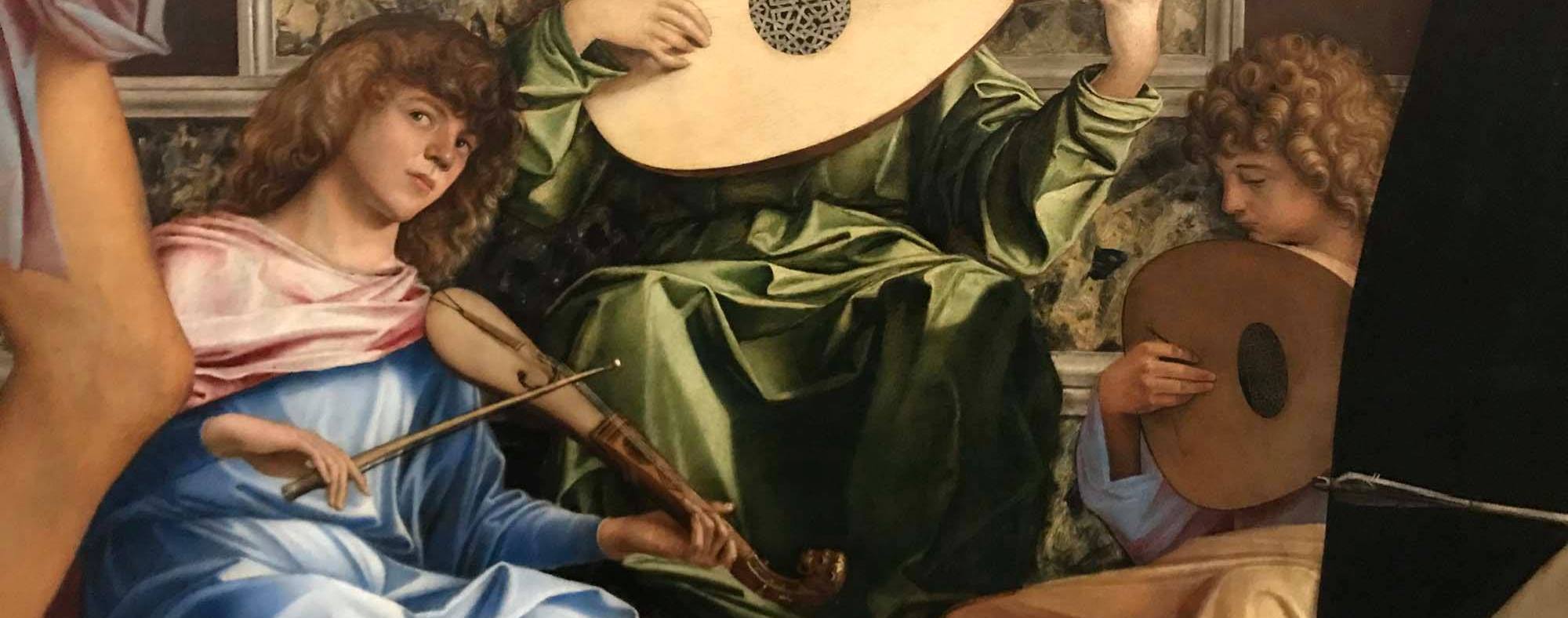
We begin with a video performance of There were three Ravens as published by Thomas Ravenscroft in 1611, performed with 4 voices and 4 lutes.


